
Unlock the secrets of AI detectors and learn how they are reshaping content authenticity.
Table of Contents
Introduction
As AI transforms content creation, the ability to distinguish between human and AI writing has become more crucial than ever. AI detectors, sophisticated tools designed to identify content generated by artificial intelligence, are at the forefront of this technological revolution. These detectors are not only essential for maintaining the integrity of digital content but also play a pivotal role in various sectors, including content creation, academic research, and digital marketing.
This guide offers an in-depth exploration of AI detectors, providing a comprehensive understanding of their mechanisms, applications, and significance. Whether you are a content creator, an academician, or a digital marketing professional, understanding the nuances of AI detectors is imperative in today's AI-driven world.
In the age of AI, distinguishing between human and AI-generated content has never been more important. AI detectors are the key to preserving the authenticity of human writing.
Join us as we delve into the world of AI detectors, uncovering the techniques, tools, and tips that make these systems so vital in the digital age. From understanding their basic principles to exploring their advanced applications, this guide is your ultimate resource for all things related to AI detection.
Understanding AI Detectors
AI detectors are advanced tools designed to identify and differentiate AI writing from human writing. At their core, these detectors analyze text or other forms of content for patterns and nuances that are characteristic of AI algorithms.
What are AI Detectors?
AI detectors function by examining various aspects of content, such as writing style, tone, syntax, and structure. These tools are equipped to pinpoint telltale signs of AI assisted writing – from overly formal language and repetitive phrasing to unusual sentence construction and lack of emotional depth.
How Do AI Detectors Work?
The operation of AI detectors hinges on complex algorithms and machine learning techniques. By processing vast datasets of both human and AI-generated content, these systems learn to distinguish between the two. They scrutinize text for anomalies or patterns that are typically absent in human writing, employing statistical analysis and predictive modeling to assess the likelihood of AI authorship.
The Science Behind AI Detection
At the heart of AI detection lies a branch of machine learning known as natural language processing (NLP). NLP algorithms are trained to understand and interpret human language, enabling them to detect inconsistencies and idiosyncrasies that suggest AI generation. Additionally, some detectors use deep learning models that mimic neural networks, further enhancing their ability to analyze and differentiate between human and AI-created content.
Through continual learning and adaptation, AI detectors are becoming increasingly sophisticated, offering a higher degree of accuracy in identifying AI-generated material. This evolution is crucial in maintaining the authenticity and trustworthiness of digital content across various platforms and industries.
Key Techniques in AI Detection
Effective AI detection relies on a diverse array of techniques, each contributing to the accurate identification of AI-generated content. These techniques range from linguistic analysis to complex pattern recognition, forming the backbone of AI detector capabilities.
Overview of AI Detection Techniques
AI detectors employ a multifaceted approach to content analysis. Some key techniques include:
Linguistic Analysis: Examining the use of language, grammar, and style to identify AI-generated patterns.
Statistical Modeling: Using statistical methods to detect anomalies in content that are indicative of AI authorship.
Machine Learning Algorithms: Employing algorithms that learn from vast datasets to distinguish between human and AI writing.
Linguistic Analysis in AI Detection
Linguistic analysis is a critical component of AI detection. It involves scrutinizing the text for linguistic cues and patterns that are uncommon in human writing. AI detectors analyze aspects like sentence structure, word choice, and syntax to identify the 'unnatural' elements often present in AI-generated content.
Pattern Recognition and Technical Aspects
Pattern recognition plays a significant role in AI detection. AI-generated text often exhibits certain repetitive patterns and lacks the nuanced variability seen in human writing. AI detectors are designed to recognize these patterns, leveraging advanced algorithms and deep learning techniques. By understanding and identifying these repetitive sequences, AI detectors can effectively pinpoint AI-authored content.
Additionally, technical aspects such as anomaly detection, probabilistic models, and natural language understanding contribute to the robustness of AI detectors. These technologies enable the detectors to analyze content with a high degree of accuracy, making them invaluable tools in the fight against AI-generated misinformation and inauthentic content.
Popular AI Detector Tools
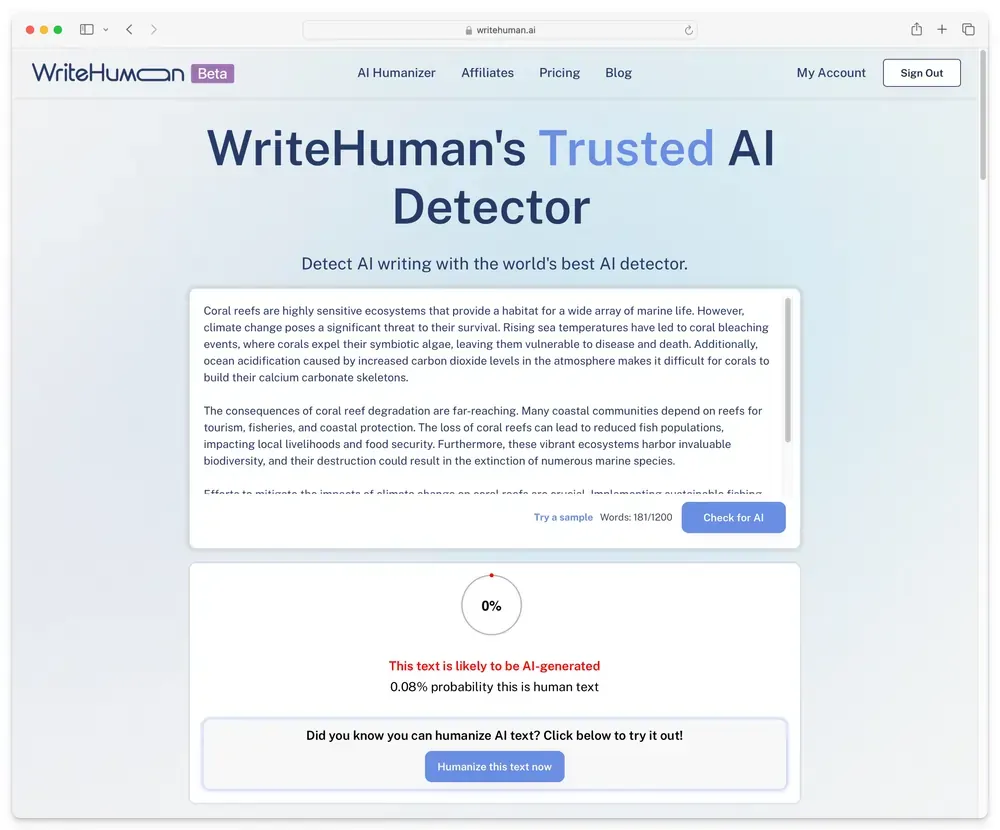
Several AI detectors have emerged as leaders in the space, offering advanced capabilities and user-friendly interfaces. One such notable tool is WriteHuman, renowned for its effectiveness and unique features.
Review of WriteHuman's free AI detector
WriteHuman stands out in the AI detection landscape for its precision and comprehensive approach. It's not just an AI detector; it also includes a built-in humanizer, setting it apart from other tools. WriteHuman's AI detector component is adept at identifying content generated by AI, using sophisticated algorithms to analyze text for AI-specific patterns and inconsistencies.
WriteHuman's Built-in Humanizer
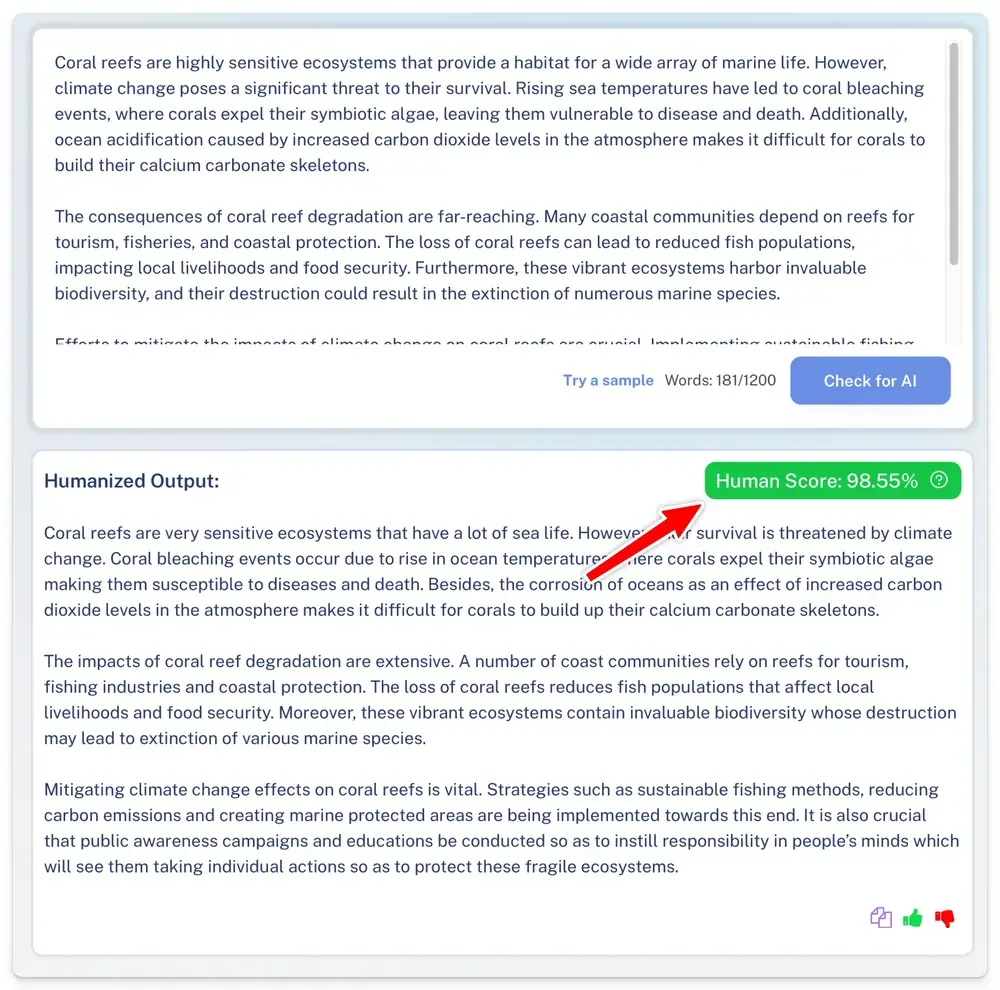
What truly distinguishes WriteHuman is its built-in humanizer feature. This innovative function goes beyond mere detection; it actively transforms AI-generated content into text that resembles human writing. By adjusting tone, style, and syntax, the humanizer component of WriteHuman refines the text, making it more natural, engaging, and relatable. This feature is particularly valuable for content creators who leverage AI for initial drafts but want the final output to have the authentic touch of human writing.
WriteHuman's integration of AI detection and humanization to create undetectable ai in one platform makes it a highly sought-after tool for content creators, marketers, and anyone looking to maintain the authenticity and quality of their digital content.
How to Use AI Detectors Effectively
Effectively using AI detectors is key to ensuring the authenticity and integrity of content. Whether you're a content creator, marketer, or academic, following a structured approach and best practices can significantly enhance the effectiveness of AI detectors. Here’s a step-by-step guide to help you navigate the process.
Step-by-Step Guide on Using AI Detectors
Choose the Right AI Detector:
Select an AI detector that best suits your specific needs. Consider factors like accuracy, ease of use, and the type of content you're analyzing.
Analyze Your Content:
Run your content through the AI detector. Pay attention to the analysis report, which will indicate whether the content is AI-generated or human-written.
Review Detector Findings:
Carefully review the findings. Look for detailed insights into why a piece of content was flagged as AI-generated.
Refine Your Content:
If your content is flagged as AI-generated and you need it to be more human-like, use a humanizer tool, like the one available in WriteHuman, to make necessary adjustments.
Final Verification:
After refining your content, run it through the AI detector again to ensure that it now passes as human-written.
Best Practices for Integrating AI Detectors into Content Workflows
Regular Use: Integrate AI detectors into your regular content creation process, especially when using AI tools for drafting content.
Training and Familiarization: Train your team on how to use AI detectors and interpret their reports for better decision-making.
Continuous Learning: Stay updated on the latest advancements in AI detection technology to leverage new features and capabilities.
Balance with Human Judgment: While AI detectors are powerful, always complement their findings with human judgment and editorial oversight.
By following these steps and best practices, you can effectively use AI detectors to maintain the authenticity and quality of your content, ensuring it resonates with your audience in a genuine way.
Challenges and Limitations
While AI detectors are groundbreaking tools in identifying AI-generated content, they are not without their challenges and limitations. Understanding these limitations is crucial for effectively using these tools and for recognizing areas where ongoing development is necessary.
Limitations in Detecting Content from ESL Speakers
One significant challenge faced by AI detectors is accurately analyzing content created by ESL (English as a Second Language) speakers. The unique linguistic patterns and structures often used by ESL individuals can sometimes be misinterpreted by AI detectors as AI-generated content. This misinterpretation can lead to false positives, potentially undermining the credibility of authentic human-created content.
Other Potential Challenges
Adaptation of AI Writing: As AI writing tools evolve, they may adopt more human-like writing styles, making it harder for detectors to differentiate between human and AI-generated content.
Contextual Understanding: AI detectors might struggle with understanding the context, leading to inaccuracies in content analysis.
Dependence on Training Data: The effectiveness of an AI detector largely depends on the quality and diversity of its training data. Limited or biased data can affect its performance.
Ongoing Developments
To overcome these challenges, continuous advancements are being made in the field of AI detection. Some of these include:
Enhanced Machine Learning Models: Developing more sophisticated models that can better understand context and linguistic nuances.
Incorporating Diverse Data Sets: Training AI detectors on more diverse data sets, including those from ESL speakers, to reduce false positives.
Human-AI Collaborative Approaches: Combining AI detection with human review to ensure higher accuracy and context understanding.
These developments are crucial in ensuring that AI detectors remain effective and reliable tools in the constantly evolving landscape of digital content creation.
Conclusion and Final Thoughts
Throughout this guide, we have explored the intricate world of AI detectors, delving into their mechanisms, applications, and the challenges they face. From understanding the basics of AI detection to examining the advanced techniques and tools like WriteHuman, this guide has covered the essential aspects of this evolving technology.
We've seen how AI detectors play a crucial role in distinguishing between human and AI-generated content, ensuring the integrity and authenticity of digital narratives. The challenges, particularly in handling content from ESL speakers, highlight the need for continuous improvement and adaptation in AI detection technologies.
As we move forward in this AI-driven era, the importance of AI detectors cannot be overstated. They are not just tools for maintaining content authenticity but also instruments for ethical content creation and consumption. It's imperative for content creators, marketers, educators, and all digital professionals to stay informed about these developments and to utilize AI detectors responsibly.
In conclusion, AI detectors are a pivotal part of our digital ecosystem. Their responsible use and ongoing development will significantly shape the future of content creation, ensuring a balance between the efficiency of AI and the authenticity of human touch.
FAQ
How Do AI Detectors Work?
AI detectors work by analyzing text for patterns and nuances that are characteristic of AI algorithms. They use a combination of linguistic analysis, statistical modeling, and machine learning techniques to differentiate between human and AI-generated content. These detectors scrutinize aspects like sentence structure, vocabulary, and syntax for signs that are typically indicative of AI authorship.
Are AI Detectors Accurate?
AI detectors are generally accurate, but their effectiveness can vary based on the complexity of the AI-generated content and the sophistication of the detection tool. Advanced detectors, trained on diverse and extensive datasets, are more likely to accurately identify AI-written content. However, as AI writing tools evolve, detectors must also adapt to maintain their accuracy.
What AI Detector Does Turnitin Use?
Turnitin uses a proprietary AI detector designed to identify potential plagiarism and academic dishonesty. While effective, it can be challenged by advanced AI humanizers like WriteHuman, which can refine AI-generated text to more closely mimic human writing, thus making it harder for such detectors to identify AI involvement.
Is There a Free AI Detector Available?
Yes, there are free AI detectors available, including the one offered by WriteHuman. WriteHuman's AI detector is not only free but also includes a built-in humanizer, making it a comprehensive tool for analyzing and refining AI-generated content to ensure authenticity and a natural tone.