
Introduction
In the rapidly advancing field of artificial intelligence (AI), the integration of AI in content creation has emerged as a paradigm shift, bringing both efficiencies and new challenges. A critical aspect of this evolution is the development of AI detection tools, aimed at discerning AI-generated content from human-authored works. The impetus for such tools stems from a diverse range of needs, ranging from maintaining authenticity in journalistic and academic writing to ensuring compliance with regulatory standards in various industries.
This backdrop sets the stage for the exploration of advanced methodologies to refine AI-generated content, making it more nuanced and indistinguishable from human writing. WriteHuman, a platform at the forefront of this technology, offers an intriguing perspective on this issue. Rather than a mere tool, WriteHuman represents a blend of linguistic expertise and AI innovation, designed to bridge the gap between AI efficiency and the human touch in writing. This blog post delves into the complexities of AI content detection and the role of technologies like WriteHuman in navigating this landscape, presenting a comprehensive analysis that transcends the traditional boundaries of AI content creation.
The Evolution of AI Writing and Detection Technologies
The integration of Artificial Intelligence (AI) in content creation has become a transformative technology across various fields, including academic writing. AI-based tools in academic writing have rapidly developed, assisting authors in the writing process and in evaluating the quality and validity of written work. These advancements have led to the use of natural language processing for understanding and generating human-like language, aiding authors in manuscript preparation and plagiarism detection.
However, the proliferation of AI-generated content, particularly from advanced models like ChatGPT, has raised concerns in academic integrity, leading to the development of AI content detection tools. These tools are essential in differentiating human and AI-authored content. A study found that such tools are more accurate in identifying content from earlier AI models than the latest ones, but they also exhibit inconsistencies and produce false positives when evaluating human-written control responses. The need for further development and refinement of AI content detection tools is evident as AI-generated content becomes more sophisticated.
In the realm of academia, the use of generative AI writing tools like ChatGPT is becoming increasingly common. According to a study by Tyton Partners, three times as many students as faculty reported being regular users of these tools. This widespread use, even in the face of institutional prohibitions, highlights the challenges in controlling access to AI writing technologies (Turnitin, 2023). Another study points out that while AI can generate scientific content as accurate as human-written content, there is still a gap in terms of depth and overall quality, with AI-generated content more likely to contain factual errors (Turnitin, 2023).
In-Depth Analysis of AI Detectors
AI detectors have become pivotal in differentiating AI-generated content from human-written material. These tools, utilizing machine learning models and sophisticated algorithms, analyze patterns, anomalies, or specific features within text to identify AI-generated content. A recent study highlighted that OpenAI's AI text classifier, trained on a diverse range of human-written texts, can accurately identify 26% of AI-written text as "likely AI-generated" while incorrectly labeling 9% of human-written text as AI-generated. This underlines both the capabilities and limitations of current AI detection technology.
Moreover, the development and application of AI detectors have not been without challenges. Issues such as fairness, transparency, and ethical use of these systems remain significant concerns. For example, biases in training data can lead to skewed results, while the interpretability of decisions made by AI detectors can be difficult to ascertain. As these tools evolve, addressing these challenges is crucial for their responsible deployment and use.
Looking ahead, the ongoing advancement of AI detectors suggests their growing sophistication and adaptability. The ability of these tools to learn and improve over time through retraining or fine-tuning allows them to stay relevant in an ever-evolving digital landscape. As AI-generated content becomes increasingly sophisticated, the development of more advanced AI detectors will be essential in maintaining the balance between leveraging AI's potential in content creation and preserving the authenticity and credibility of written content.
Behind the Scenes of WriteHuman's Anti AI Detector
WriteHuman stands at the intersection of linguistic expertise and AI innovation, bridging the gap between AI efficiency and the authenticity of human writing.
WriteHuman's Anti AI Detector represents a significant advancement in the realm of AI-generated content rewriting. At its core, the technology employs a sophisticated combination of algorithms designed to analyze and modify AI-generated text. These algorithms focus on detecting linguistic patterns typical of AI writing and then applying nuanced linguistic and semantic alterations to the text, effectively making it indistinguishable from human-generated content.
The process begins with the identification of common AI writing signatures, such as certain phrase structures, vocabulary usage, and syntactic patterns. Once these markers are identified, WriteHuman's models work to subtly alter these elements. This involves not just simple synonym replacement but a deeper transformation of the text, including changes in sentence structure, tone, and narrative flow. The aim is to preserve the original message and intent while infusing the text with a style and character that closely resembles human writing.
Additionally, WriteHuman employs advanced semantic analysis to ensure that the rewritten content maintains coherence and logical flow. This involves understanding the context and meaning behind the text, allowing the tool to make more informed and nuanced alterations. The result is a piece of content that not only bypasses AI detection tools but also resonates more genuinely with human readers, bridging the gap between the efficiency of AI and the authenticity of human touch in writing.
Ethical Considerations and Industry Standards
The practice of bypassing AI detectors raises significant ethical questions, particularly in contexts where authenticity and originality are crucial, such as academia and journalism. The use of AI rewriting tools must be balanced with ethical responsibility, adhering to industry standards that emphasize integrity and transparency. This includes clear disclosure of AI-generated content and respecting intellectual property and academic honesty policies.
However, it is essential to consider the diverse needs of users who might depend on AI assistance. For instance, individuals for whom English is a second language may rely on AI tools for improving their written communication. In such cases, stringent AI detection can inadvertently lead to unfair treatment or disadvantages. These individuals may use AI to enhance their writing skills or compensate for language barriers, not to deceive or plagiarize. This highlights a critical ethical concern: ensuring that AI detection tools do not disproportionately affect those who use AI for legitimate and necessary reasons.
As AI technology continues to advance, it is crucial to maintain an ethical framework that fosters inclusivity and fairness. This involves ongoing dialogue among technologists, ethicists, and industry stakeholders to develop and adhere to standards that consider the diverse needs and circumstances of all users. Balancing the benefits of AI in content creation with ethical and responsible use is vital for the equitable advancement of AI technologies.
Comparative Analysis with Other Tools
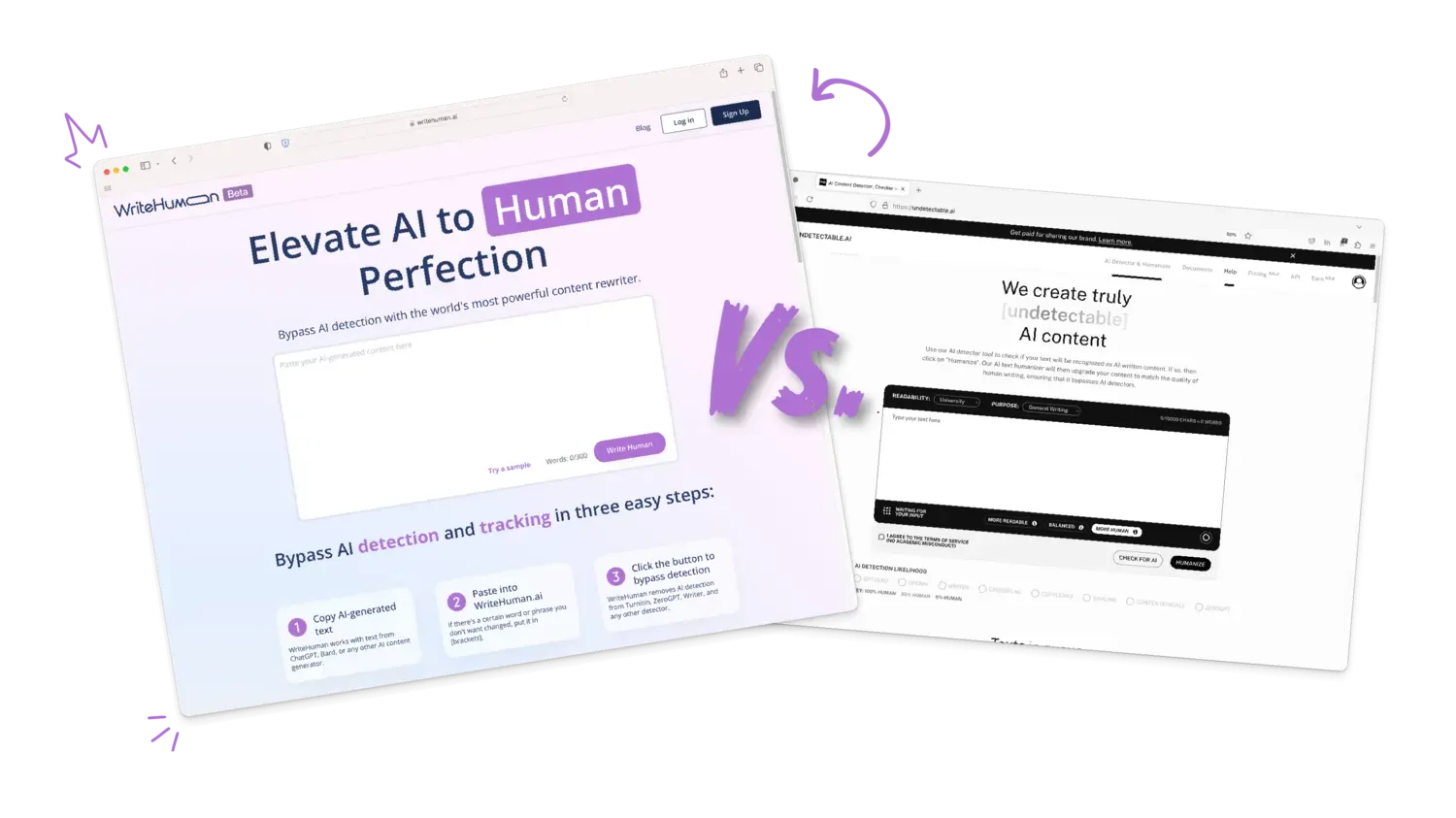
WriteHuman
Advanced linguistic algorithms for high-quality, grammatically correct content.
Focuses on natural flow and readability, avoiding awkward phrasing or disjointed narratives.
Incorporates ethical guidelines and standards for responsible use.
Balances AI assistance benefits with ethical content creation practices.
Undetectable AI
Lacks advanced linguistic refinement, leading to quality issues in output.
StealthGPT
Effective in evading detection but may produce content with cohesion problems.
Struggles with maintaining a consistent tone and style throughout the text.
Stealth Writer
Targets AI detection bypassing with moderate success.
Content quality varies, with occasional lapses in clarity and coherence.
Conch AI
Aims to rewrite AI-generated content but can result in syntactical errors.
Output often requires additional human editing to improve readability.
Conclusion
This exploration of the dawn of anti AI detectors has highlighted the significant advancements in AI content creation and the parallel development of AI detection technologies. WriteHuman emerges as a pioneering solution, offering a unique balance between technological innovation and ethical responsibility. Its advanced linguistic algorithms, focus on content quality, and commitment to ethical standards set it apart in the field of AI rewriting tools.
In summary, WriteHuman represents more than just a tool for bypassing AI detectors; it is a testament to the potential of AI in enhancing the authenticity and human touch in content creation. As we navigate the evolving landscape of AI in writing, WriteHuman stands as a beacon of innovation, driving forward the responsible and ethical use of AI in content generation.
Frequently Asked Questions
What is an Anti AI Detector?
An anti AI detector is a technology designed to identify and differentiate AI-generated content from human-written text. It uses algorithms and machine learning to analyze writing patterns and markers indicative of AI authorship.
How Does WriteHuman Bypass AI Detectors?
WriteHuman uses advanced linguistic algorithms to subtly alter AI-generated text, focusing on nuances in language and semantics. This transforms the content to closely resemble human writing, making it undetectable by AI detectors.
Are There Ethical Concerns with Bypassing AI Detectors?
Yes, bypassing AI detectors raises ethical concerns, especially in academic and journalistic contexts. WriteHuman addresses this by promoting responsible use and adhering to ethical guidelines and industry standards.
How Does WriteHuman Compare to Other Anti AI Detector Tools?
WriteHuman stands out for its high-quality content output, linguistic refinement, and strong ethical framework, setting it apart from other tools like Undetectable AI, StealthGPT, and Conch AI.